


Fir Laser Cleaning
Paint, soot, and weathered fiber come off fir without belt-sanding the grain away. Pitch pockets flare when they heat. Earlywood and latewood in the same ring take energy different...


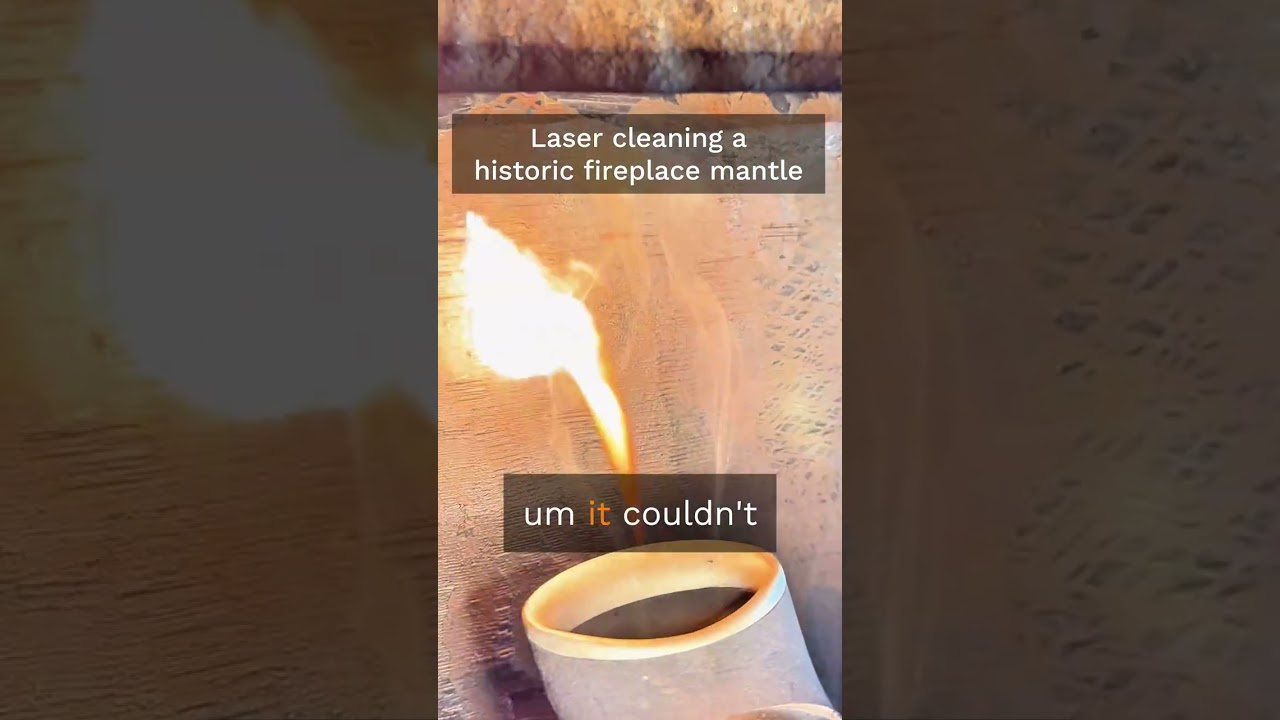
Laser cleaning removes baked-on creosote and tar glaze from a wood fireplace mantle after chemical strippers quit, because the beam burns the carbon layer off instead of trying to dissolve it. That is why solvents fail here: they soften varnish but skate across the hard, sooty crust that years of heat cycling bake onto oak and pine alike, so another coat of stripper just re-softens old stain along with the grime. A tuned pass lifts the black glaze off in thin layers and stops at bare or stained wood underneath, so the mantle keeps its original patina instead of going down to raw grain. It won't restore wood that already scorched or cracked from direct flame contact, and it won't cut through a heavy wax or oil finish without a first pass to clear that coat away. Species matters too: softer pine chars faster than dense oak, so a setting safe for one can scorch trim milled from the other on the same mantle. Homes running a full heritage restoration usually clean the mantle before the surrounding masonry, since soot from an untreated firebox just redeposits on a mantle finished too early.
Short GRD_rEGmAnw shows pulsed laser clearing 80-year creosote and tar from a wood fireplace mantle in 45 seconds after chemical strippers failed.
Paint, soot, and weathered fiber come off fir without belt-sanding the grain away. Pitch pockets flare when they heat. Earlywood and latewood in the same ring take energy different...

Laser cleaning removes aged wax, shellac, and varnish from walnut furniture without sanding into the dark figured grain that makes the wood valuable. A pulsed beam lifts each finis...

Finish, glue, and work soil come off maple without sanding the bright face dull. Scorch shows immediately on this pale wood. Curly or birdseye figure takes heat unevenly. A thin fi...

A coupon test on solid oak furniture governs the grain and moisture read before a shellac-stripping pass moves onto millwork panels. That pass will not touch veneer glue lines the...

Cherry's closed hardwood grain governs how much surface dust a cleaning pass removes from furniture and millwork stock before it scorches, unlike oak's open ring-porous structure....

A pine stud carries resin pockets and knots that confirm the softwood species long before a beam ever touches the surface, and those resin notes decide how the setup proceeds. Sapp...
Soot and char left after a fire come off [stone](/materials/marble-laser-cleaning) and [wood](/materials/oak-laser-cleaning) under pulsed light when the carbon film absorbs the beam. What matters is not bleaching wood grain or etching stone, capturing the soot load, and proving a pad on a hidden face first. Stone and wood do not share the same safe energy range.
Cured paint and powder films leave [steel](/materials/steel-laser-cleaning) and [aluminum](/materials/aluminum-laser-cleaning) hosts once a pulsed beam reaches the pigment's own breakdown point instead of chasing the metal or wood underneath. What matters is naming the pigment chemistry before the pass, capturing lead- or chromate-bearing dust the moment it forms, and proving the exact setting on a labeled coupon rather than trusting one universal recipe. A shop that skips either the chemistry check or the coupon walk risks leftover binder on one host or a scorched surface on the next.
Thin hard wear films on [tool steel](/materials/tool-steel-laser-cleaning) and [carbide](/materials/tungsten-carbide-laser-cleaning) come off under pulsed light so an edge can take a new coat. What matters is not nicking the cutting edge, capturing cobalt-bearing dust from carbide, and proving the strip on a spare tool because these skins are thin and the host sits close underneath.
Shop grease and oil sit on [steel](/materials/steel-laser-cleaning) and [aluminum](/materials/aluminum-laser-cleaning) as films that soak into surface roughness, then come off under pulsed light as heat breaks the hydrocarbon apart at the metal. What matters is leftover film that blocks a weld or a coat, smoke from the burned oil, and proving a water-break land on scrap before the production part. A wet degrease line is the other path this job replaces.

Landmark facade work requires a hidden test patch before pulsed laser cleaning touches any visible elevation. The pass removes soot, pollution crust, and graffiti from [brick](/mat...

Removes centuries of soot, biological growth, and pollution crusts from [brick](/materials/brick-laser-cleaning), [limestone](/materials/limestone-laser-cleaning), and [sandstone](...

Fouled boiler tubes, heat exchangers, and turbine casings often cannot leave the aisle for a shop. Online laser cleaning brings a fiber-delivered head to those surfaces so oxide, r...
