


Walnut Laser Cleaning
Laser cleaning removes aged wax, shellac, and varnish from walnut furniture without sanding into the dark figured grain that makes the wood valuable. A pulsed beam lifts each finis...


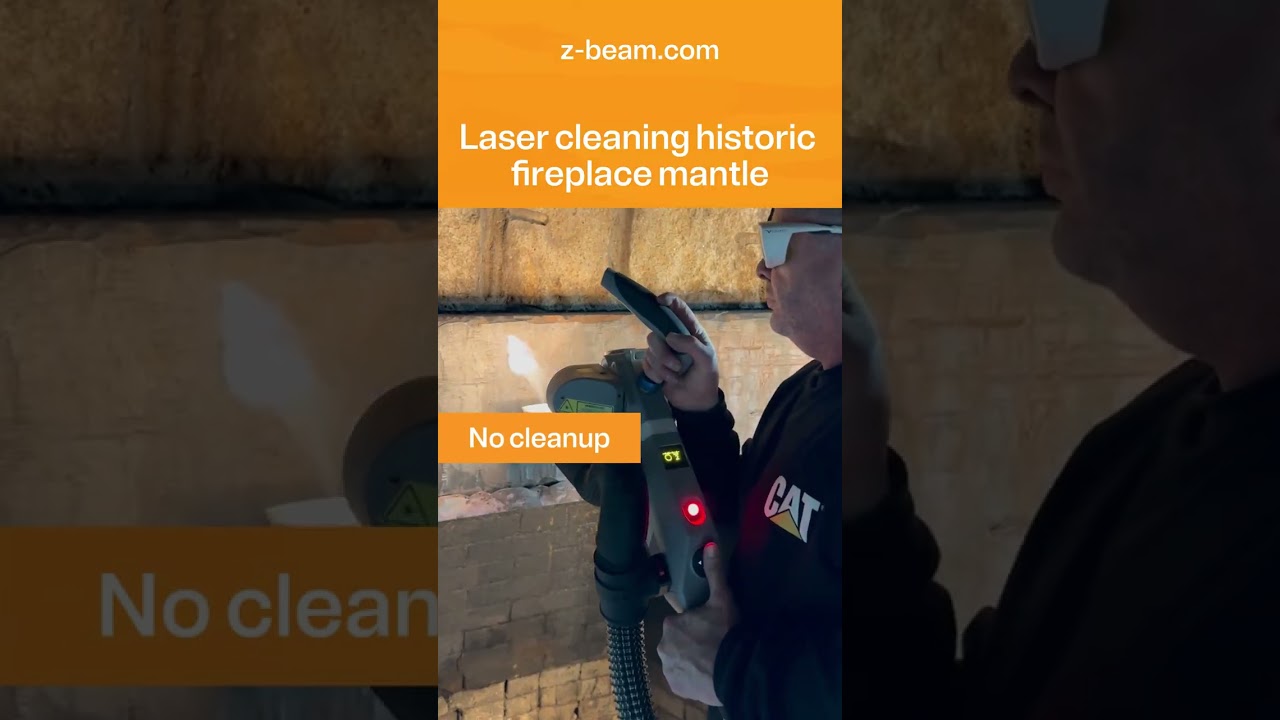
Laser cleaning removes soot and old varnish from a historic fireplace beam and mantle without abrading the carved tool marks or wood grain underneath. Wood chars at aggressive settings, so a steel-cleaning recipe fails here; the operator must run lower power and shorter dwell than techniques suited to oak or walnut stock elsewhere in the shop. This clip does not cover refinishing, stain matching, or structural repair of the timber, since those steps come after cleaning, not during it. Similar caution around substrate scorching applies to heritage architectural cleaning and historic masonry restoration work shown elsewhere on the site. The mantle keeps its carved detail and aged patina after treatment, since the laser targets only the surface contamination layer and spares the wood fiber below.
Short UtW7HEItWyU shows pulsed laser clearing old varnish, soot, and grime from a historic fireplace beam and mantle in 44 seconds without grit.
Laser cleaning removes aged wax, shellac, and varnish from walnut furniture without sanding into the dark figured grain that makes the wood valuable. A pulsed beam lifts each finis...

Paint, soot, and weathered fiber come off fir without belt-sanding the grain away. Pitch pockets flare when they heat. Earlywood and latewood in the same ring take energy different...

Old varnish removes cleanly from this hardwood species without bleaching the finish the way thinner settings do on cherry's furniture-grade boards. Mahogany's tight, resin-rich gra...

Cedar decks and siding are aromatic softwood with open grain and natural oils that hold soil deeper than denser softwoods. Mildew, weathered finish, and paint can come off with a d...

Cherry's closed hardwood grain governs how much surface dust a cleaning pass removes from furniture and millwork stock before it scorches, unlike oak's open ring-porous structure....

A coupon test on solid oak furniture governs the grain and moisture read before a shellac-stripping pass moves onto millwork panels. That pass will not touch veneer glue lines the...
Cured paint and powder films leave [steel](/materials/steel-laser-cleaning) and [aluminum](/materials/aluminum-laser-cleaning) hosts once a pulsed beam reaches the pigment's own breakdown point instead of chasing the metal or wood underneath. What matters is naming the pigment chemistry before the pass, capturing lead- or chromate-bearing dust the moment it forms, and proving the exact setting on a labeled coupon rather than trusting one universal recipe. A shop that skips either the chemistry check or the coupon walk risks leftover binder on one host or a scorched surface on the next.
Soot and char left after a fire come off [stone](/materials/marble-laser-cleaning) and [wood](/materials/oak-laser-cleaning) under pulsed light when the carbon film absorbs the beam. What matters is not bleaching wood grain or etching stone, capturing the soot load, and proving a pad on a hidden face first. Stone and wood do not share the same safe energy range.
Thin hard wear films on [tool steel](/materials/tool-steel-laser-cleaning) and [carbide](/materials/tungsten-carbide-laser-cleaning) come off under pulsed light so an edge can take a new coat. What matters is not nicking the cutting edge, capturing cobalt-bearing dust from carbide, and proving the strip on a spare tool because these skins are thin and the host sits close underneath.
Shop grease and oil sit on [steel](/materials/steel-laser-cleaning) and [aluminum](/materials/aluminum-laser-cleaning) as films that soak into surface roughness, then come off under pulsed light as heat breaks the hydrocarbon apart at the metal. What matters is leftover film that blocks a weld or a coat, smoke from the burned oil, and proving a water-break land on scrap before the production part. A wet degrease line is the other path this job replaces.

Landmark facade work requires a hidden test patch before pulsed laser cleaning touches any visible elevation. The pass removes soot, pollution crust, and graffiti from [brick](/mat...

Removes centuries of soot, biological growth, and pollution crusts from [brick](/materials/brick-laser-cleaning), [limestone](/materials/limestone-laser-cleaning), and [sandstone](...

Salt air, not the hourly rate, decides a Bay Area rust job. Laser cleaning takes field [rust](/contaminants/iron-oxide-rust-laser-cleaning) off [steel](/materials/steel-laser-clean...

A Bay Area body shop stripping failed epoxy or polyurethane before recoat runs into a VOC cap near 50 grams per liter on solvent surface prep and spray-line cleanup, and older meth...
