


Brick Laser Cleaning
Removes soot, biological growth, and old paint from fired clay brick without abrasive blasting that erodes the face or the mortar joints around each unit. The beam targets the surf...


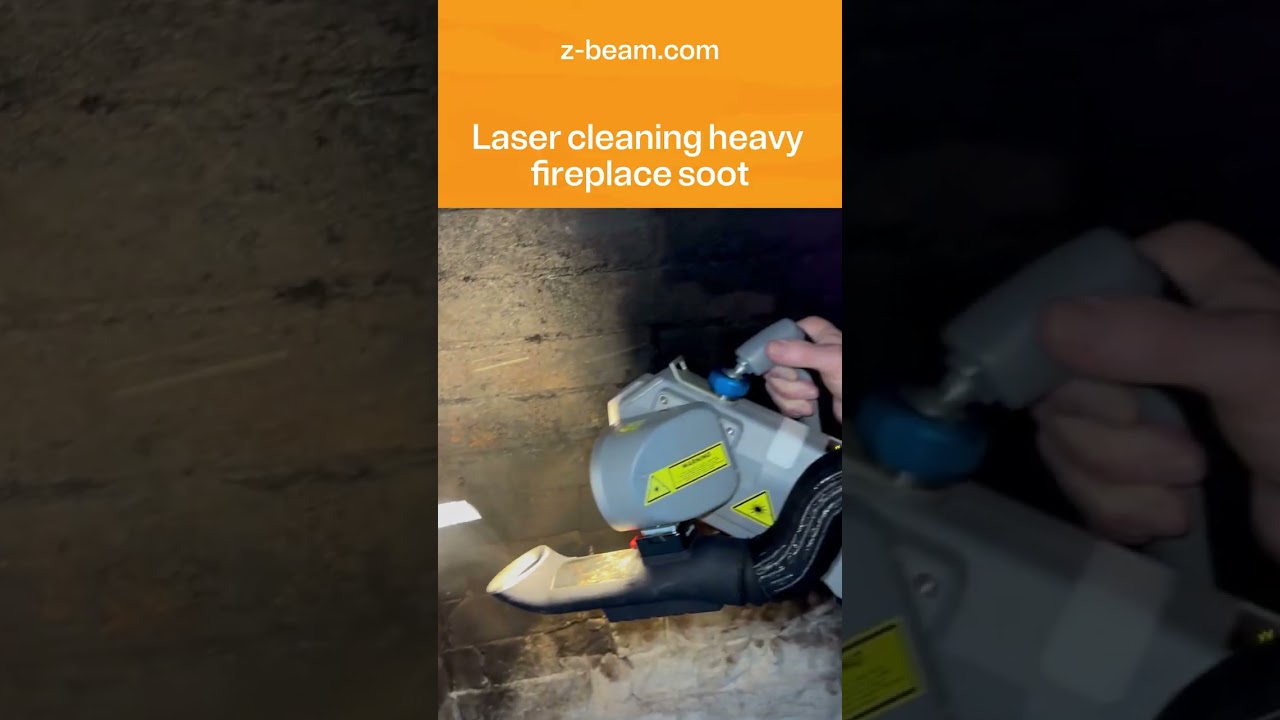
Heavy fireplace soot keeps a thick carbon and creosote layer across brick, mortar, and metal surrounds, and it resists ordinary scrubbing once heat has baked it into the surface. Laser cleaning strips that carbon film and removes smoke staining down to the original stone or masonry color without water, chemical strippers, or abrasive blasting that can gouge soft mortar joints. The beam works well on flat firebox brick and on metal surrounds, much like soot removal on cast iron cookware or stove parts elsewhere in a home. It reaches into shallow mortar texture but will not fully clear deep creosote that has penetrated porous brick or cracked masonry, and it will not repair spalled stone, reset loose mortar, or reverse heat damage to a firebox liner. On older hearths tied to heritage architectural work or historic masonry surrounds, cleaning still needs a mason's judgment for anything beyond surface carbon and stain.
Short gVGrNv-UajU shows pulsed laser clearing heavy fireplace soot from metal in 44 seconds without grit.
Removes soot, biological growth, and old paint from fired clay brick without abrasive blasting that erodes the face or the mortar joints around each unit. The beam targets the surf...

Laser cleaning removes soot and old varnish from ash furniture and flooring without raising the open grain that abrasive sanding tears open. Ash's ring-porous structure alternates...

Laser cleaning removes surface soiling, paint, and biological growth from concrete without water, media blast, or chemical strippers, so rebar cover and nearby finishes stay undama...

Rust and mill scale come off iron without abrasive blasting the face. Thickness and moisture in that rust change the job. Cast iron with graphite at the surface does not behave lik...

Interior gypsum and lime plaster can take a careful pulsed laser pass that removes soot, paint films, and surface soil from heritage rooms. The finish is soft and holds little heat...

A pulsed beam clears soot and grease film from talc-rich hearths and counters without the grooves or fine white powder that sanding pads leave on soapstone. The stone is mostly tal...
Dense magnetite scale on [hot-rolled steel](/materials/steel-laser-cleaning) needs more than one careful pulsed pass, unlike a light rust bloom on the same plate. The same laminate can show up on [hot-work tool steel](/materials/tool-steel-laser-cleaning) after forging heat. What matters is naming the film correctly before setting power, keeping extraction live on the heavy oxide dust, and not treating the job like a rust-only wipe. Thin stock can still mark if energy runs high before the laminate is fully gone.
Shop grease and oil sit on [steel](/materials/steel-laser-cleaning) and [aluminum](/materials/aluminum-laser-cleaning) as films that soak into surface roughness, then come off under pulsed light as heat breaks the hydrocarbon apart at the metal. What matters is leftover film that blocks a weld or a coat, smoke from the burned oil, and proving a water-break land on scrap before the production part. A wet degrease line is the other path this job replaces.
Atmospheric rust comes off [carbon steel](/materials/steel-laser-cleaning) and [cast iron](/materials/cast-iron-laser-cleaning) under pulsed light as oxide dust, not a solvent wash. What matters is pit depth, whether mill scale sits underneath, and keeping energy below the point that melts thin stock. Extraction has to catch the oxide load, and a heavily pitted plate may still need a mechanical step before the laser.
Cured paint and powder films leave [steel](/materials/steel-laser-cleaning) and [aluminum](/materials/aluminum-laser-cleaning) hosts once a pulsed beam reaches the pigment's own breakdown point instead of chasing the metal or wood underneath. What matters is naming the pigment chemistry before the pass, capturing lead- or chromate-bearing dust the moment it forms, and proving the exact setting on a labeled coupon rather than trusting one universal recipe. A shop that skips either the chemistry check or the coupon walk risks leftover binder on one host or a scorched surface on the next.

Landmark facade work requires a hidden test patch before pulsed laser cleaning touches any visible elevation. The pass removes soot, pollution crust, and graffiti from [brick](/mat...

Removes centuries of soot, biological growth, and pollution crusts from [brick](/materials/brick-laser-cleaning), [limestone](/materials/limestone-laser-cleaning), and [sandstone](...

Precision surface work requires contact-free cleaning because gauge faces, optical flats, and polished tooling scratch under abrasive pads or chemical baths. Pulsed fiber sources r...

A hot runner keeps molten plastic flowing through heated manifolds and nozzles inside an [injection mold](/applications/injection-mold-tooling-laser-cleaning), and carbon deposits...

Salt air, not the hourly rate, decides a Bay Area rust job. Laser cleaning takes field [rust](/contaminants/iron-oxide-rust-laser-cleaning) off [steel](/materials/steel-laser-clean...

Semiconductor cleanroom tooling leaves the bay so a pulsed head can lift process film from open faces without throwing grit into ISO air. [Stainless steel](/materials/stainless-ste...
