


Brick Laser Cleaning
Removes soot, biological growth, and old paint from fired clay brick without abrasive blasting that erodes the face or the mortar joints around each unit. The beam targets the surf...


Laser cleaning removes soot, creosote, and smoke staining from brick fireplace surfaces without abrasive media or chemical strippers. It does not repoint mortar joints or repair spalled brick faces, and it will not lighten fire-darkened mortar back to original color in a single pass. Historic hearths often pair this step with historic masonry restoration planning before any thermal work begins.
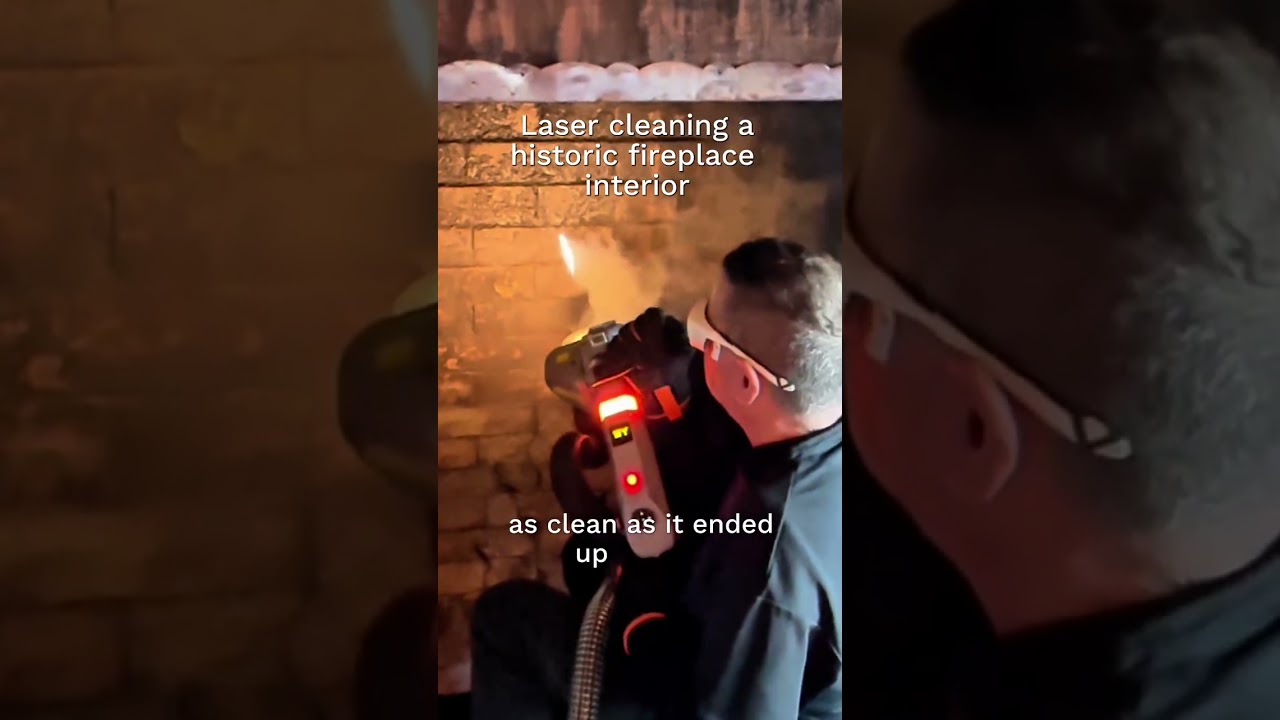
Short AhhoirJT1LA shows a Netalux laser clearing about 3/8 inch of pitch tar, creosote, and soot from an 80-year-old brick fireplace at roughly 415 mm standoff with repeated passes.
Removes soot, biological growth, and old paint from fired clay brick without abrasive blasting that erodes the face or the mortar joints around each unit. The beam targets the surf...

Laser cleaning removes surface soiling, paint, and biological growth from concrete without water, media blast, or chemical strippers, so rebar cover and nearby finishes stay undama...
Black crust and carbon film on [marble](/materials/marble-laser-cleaning) and [limestone](/materials/limestone-laser-cleaning) come off under pulsed light once the soil absorbs far more energy than the pale stone it sits on. What decides the outcome is telling gypsum crust from a thin soot film or a living biofilm, treating sandstone as its own coupon job because its safe margin runs a fraction of marble's, and capturing the crust dust so it does not resettle on the scaffold.
Soot and char left after a fire come off [stone](/materials/marble-laser-cleaning) and [wood](/materials/oak-laser-cleaning) under pulsed light when the carbon film absorbs the beam. What matters is not bleaching wood grain or etching stone, capturing the soot load, and proving a pad on a hidden face first. Stone and wood do not share the same safe energy range.
Workpiece metal that pressure-welds onto a [tool steel](/materials/tool-steel-laser-cleaning) rake or a [carbide](/materials/tungsten-carbide-laser-cleaning) cutting edge comes off under pulsed light so the tool can cut again. What matters is telling the deposit from the tool itself, avoiding a nicked edge, and capturing metal dust as it leaves. Prove the pass on a spare tool first because the deposit and the host can share the same color and the same base metal.
Cured paint and powder films leave [steel](/materials/steel-laser-cleaning) and [aluminum](/materials/aluminum-laser-cleaning) hosts once a pulsed beam reaches the pigment's own breakdown point instead of chasing the metal or wood underneath. What matters is naming the pigment chemistry before the pass, capturing lead- or chromate-bearing dust the moment it forms, and proving the exact setting on a labeled coupon rather than trusting one universal recipe. A shop that skips either the chemistry check or the coupon walk risks leftover binder on one host or a scorched surface on the next.

Landmark facade work requires a hidden test patch before pulsed laser cleaning touches any visible elevation. The pass removes soot, pollution crust, and graffiti from [brick](/mat...

Removes centuries of soot, biological growth, and pollution crusts from [brick](/materials/brick-laser-cleaning), [limestone](/materials/limestone-laser-cleaning), and [sandstone](...
