


Brass Laser Cleaning
Brass hardware and fixtures can shed tarnish and old lacquer with a dry laser pass when energy stays on the soil and zinc is not driven out of the surface. Acid dips are the usual...


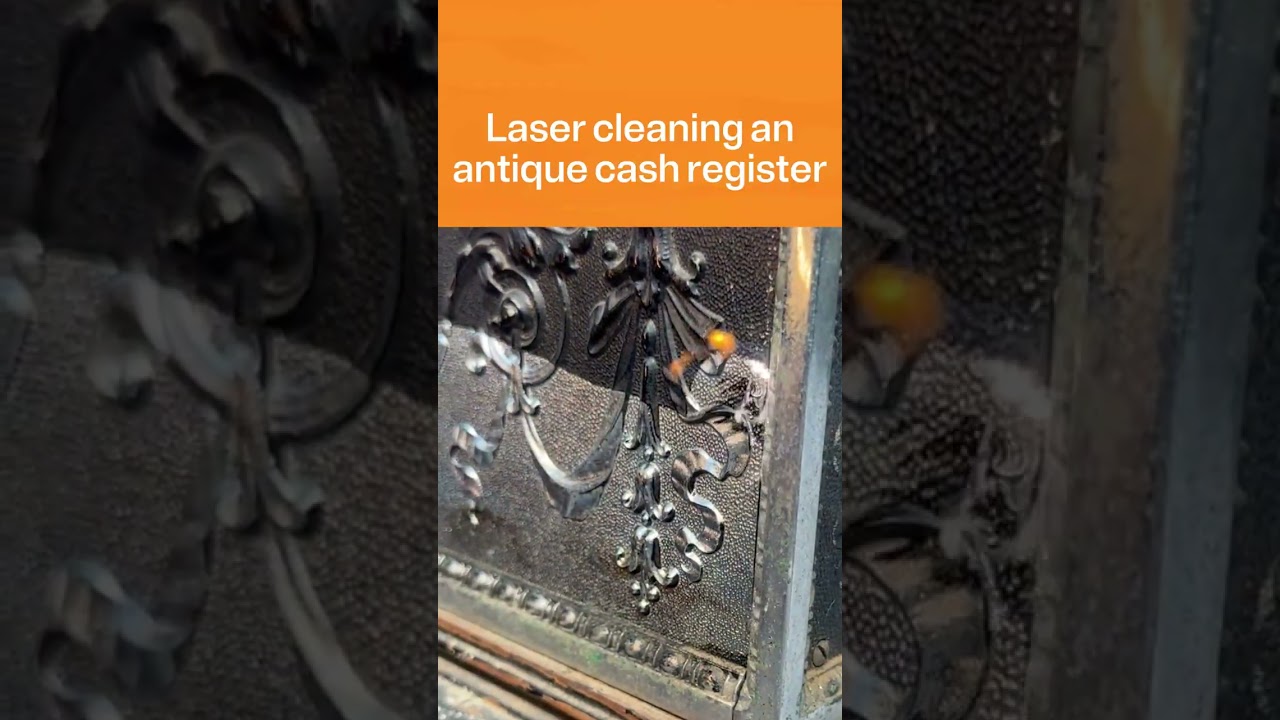
A laser cleaning system removes decades of tarnish, lacquer residue, and grime from an antique cash register in minutes, restoring the brass drawer front and nickel-plated keys without harming the original finish underneath. The pulsed beam vaporizes surface oxidation and old coatings layer by layer, so it suits the ornate scrollwork many registers carry, the kind of fine detail that cleaning tarnished brass fittings depends on getting right. It also handles the cast iron base and steel mechanism, since the same non-contact method adapts easily when removing old paint layers from a cabinet panel. What it will not do is repair dented sheet metal, replace missing keys, or fix a jammed mechanism, and it will not touch printed decals or paper labels, since lingering heat can scorch them. A trained technician still checks fluence settings before running a full pass, because factory-original nickel plating is thinner than modern replating and can dull if pushed too hard.
Short G5USK_IL8Xk (42 s) shows pulsed fiber laser cleaning on an antique cash register so paint, rust, and grime leave detailed brass while engravings stay readable.
Cured paint and powder films leave [steel](/materials/steel-laser-cleaning) and [aluminum](/materials/aluminum-laser-cleaning) hosts once a pulsed beam reaches the pigment's own breakdown point instead of chasing the metal or wood underneath. What matters is naming the pigment chemistry before the pass, capturing lead- or chromate-bearing dust the moment it forms, and proving the exact setting on a labeled coupon rather than trusting one universal recipe. A shop that skips either the chemistry check or the coupon walk risks leftover binder on one host or a scorched surface on the next.
Workpiece metal that pressure-welds onto a [tool steel](/materials/tool-steel-laser-cleaning) rake or a [carbide](/materials/tungsten-carbide-laser-cleaning) cutting edge comes off under pulsed light so the tool can cut again. What matters is telling the deposit from the tool itself, avoiding a nicked edge, and capturing metal dust as it leaves. Prove the pass on a spare tool first because the deposit and the host can share the same color and the same base metal.
Copper oxide films come off under pulsed light when the job calls for bright [copper](/materials/copper-laser-cleaning) rather than a kept patina. What matters is stopping before the beam cuts into the copper, capturing the oxide fume, and proving the land on scrap because a wanted patina and an unwanted tarnish need different end points.
Shop grease and oil sit on [steel](/materials/steel-laser-cleaning) and [aluminum](/materials/aluminum-laser-cleaning) as films that soak into surface roughness, then come off under pulsed light as heat breaks the hydrocarbon apart at the metal. What matters is leftover film that blocks a weld or a coat, smoke from the burned oil, and proving a water-break land on scrap before the production part. A wet degrease line is the other path this job replaces.

Precision surface work requires contact-free cleaning because gauge faces, optical flats, and polished tooling scratch under abrasive pads or chemical baths. Pulsed fiber sources r...

Landmark facade work requires a hidden test patch before pulsed laser cleaning touches any visible elevation. The pass removes soot, pollution crust, and graffiti from [brick](/mat...
